VHB Tape: Clear or Grey, and When Not to Use It
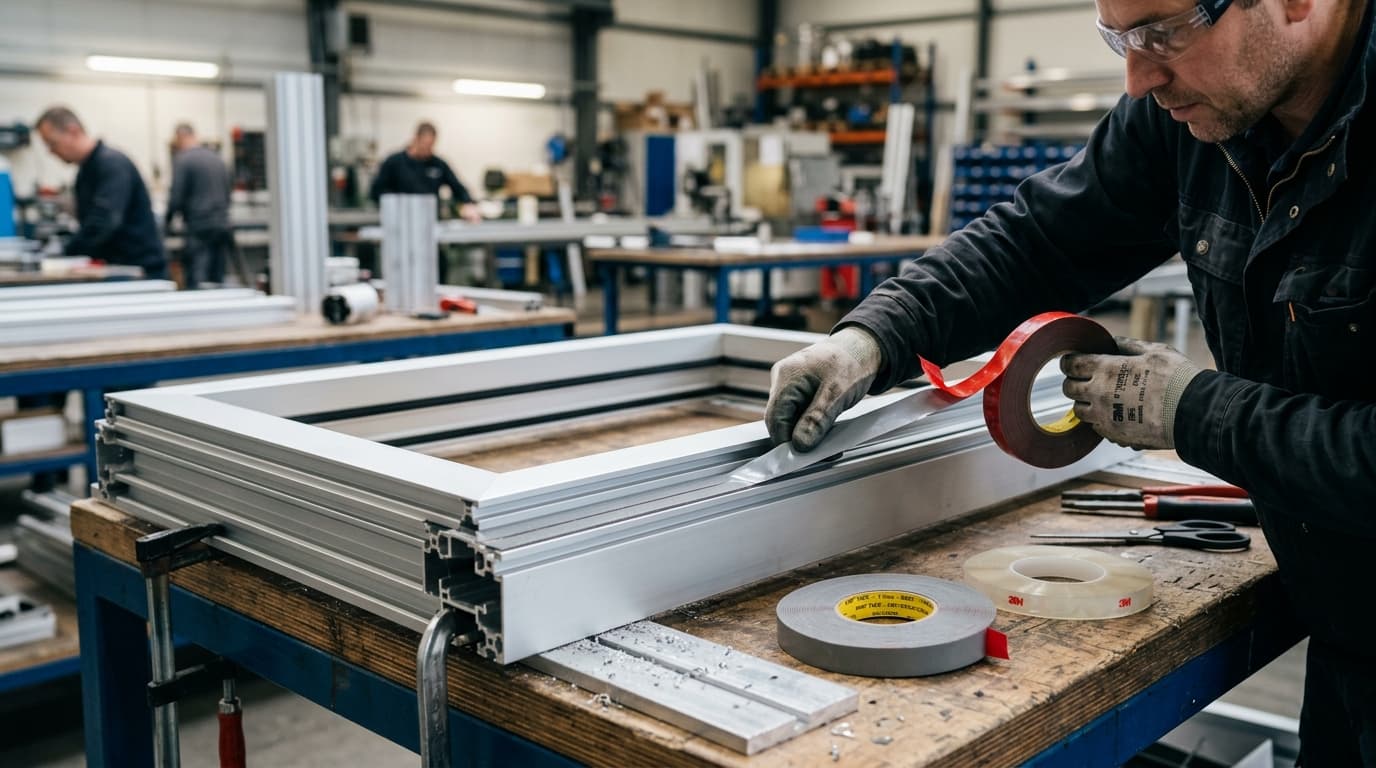
Structural bonding tape holds glass and panels without visible fixings. Which colour for which joint, and the surface prep that decides whether it holds.
What is the difference between clear and grey VHB tape?
Grey is the structural grade, used where the bond carries load — cladding, facade panels, frame bonding. Clear is for joints that will be visible through glass, where a grey line would show.
What VHB tape actually is
VHB stands for very high bond. It is a double-sided acrylic foam tape that forms a structural bond between two surfaces, strong enough in the right application to replace mechanical fixings.
The foam core matters as much as the adhesive. It is viscoelastic, meaning it absorbs the differential movement between two materials that expand and contract at different rates — aluminium and glass, for instance, on a facade in the sun.
A rigid adhesive in the same joint would eventually fail from that cycling. The foam accommodates it.
Clear or grey
Grey (SA-48) is the structural grade. Use it for cladding panels, facade bonding, and fixing aluminium sections to each other where the joint is hidden and the bond carries load.
Clear (SA-47) is for joints that will be seen through glass. A grey tape line behind a clear panel is visible and looks like a mistake, so where the joint shows, clear is the choice. It is generally specified for lighter duty than the grey.
If the joint is hidden, use grey. If it will be looked at through glass, use clear and keep the load modest.
Surface preparation is most of the job
Nearly every VHB failure we hear about is a preparation failure, not a product failure.
Both surfaces must be clean, dry and free of oil — including the oil from handling, which is invisible and enough to prevent a bond. Wipe both with a suitable solvent and let them flash off completely before applying.
The surfaces must also be sound. Tape bonded to a flaking powder coat is holding the flakes, not the panel.
Temperature matters. Acrylic adhesives need warmth to wet out and form their bond; applying in cold conditions gives a weak initial hold that may never reach full strength.
Pressure, then patience
VHB needs firm pressure across the whole bond line to make contact. Run a roller along it rather than pressing with your fingers, which leaves the middle of the strip barely touching.
It then needs time. Initial hold is immediate but a meaningful fraction of the final strength develops over the following hours and days. Do not load a bonded joint straight away, and do not judge it by how it feels ten minutes after application.
Where not to use it
Do not use VHB as a weather seal. It bonds; it does not seal a joint against water. A bonded joint that also needs to keep water out needs silicone as well.
Do not use it on unsupported glass edges or as the only thing holding a panel where failure would drop glass on someone. Structural glazing is engineered work, and tape is one component of it rather than a substitute for the engineering.
Do not use it on a surface you intend to separate later. It is not designed to come apart, and removing it usually damages the finish underneath.
Do not use it on dusty, rough or porous surfaces. It needs an intimate, continuous contact area, and masonry and bare concrete do not provide one.
Sizing the tape
Width determines bond area and therefore load capacity. Thickness determines how much differential movement the joint can absorb.
A wider tape carries more; a thicker tape tolerates more movement. Joints between materials with very different expansion rates, or long runs exposed to sun, need thickness more than they need width.
Tell us the panel size, the two materials and whether the joint will be in direct sun, and we will point you at the right one.
Have Questions About Profile Specifications for Your Project?
Speak directly with our metallurgical sales team. We assist architects and structural contractors with die design, alloy selection, and wind load calculations.
Written by Abhishek, Salasar Aluminium & Hardware
Technical Hardware & Aluminium Engineering Team at Salasar Aluminium & Hardware, Raipur. Expert guidance on door kits, closers, shower hinges, and architectural fittings.
Read Next
How to Stop Dust Coming Under a Door
The gap under the door is the biggest opening in most rooms. Which seal suits which door, and why brush beats rubber on a door that opens all day.

Aluminium Door Handle Types Explained: D, H, American and Taiwan
Four handle profiles, what each suits, and how to get the fixing centres right so you are not drilling a second set of holes.