Toughened Glass Thickness: 8 mm, 10 mm or 12 mm?

How much each thickness weighs, what that means for hinges and connectors, and why cut-outs have to be decided before the glass is made.
How thick should shower enclosure glass be?
Eight millimetres is the common residential choice; 10 mm and 12 mm are heavier, feel more solid and need hardware rated to carry them. A 700 x 1900 mm door is about 27 kg in 8 mm and about 40 kg in 12 mm, and that difference hangs on the hinges for years.
Weight is the decision
Glass weighs roughly 2.5 kg per square metre per millimetre of thickness. That single figure drives almost every downstream choice.
Take a typical shower door at 700 mm by 1900 mm, which is 1.33 square metres.
In 8 mm that door weighs about 27 kg. In 10 mm, about 33 kg. In 12 mm, about 40 kg.
Those 13 kilograms between the lightest and heaviest option hang off two hinges continuously, for years. That is why hardware ratings exist, and why a door that was fine on the day can sag two years later.
What each thickness is for
Eight millimetres is the standard residential shower choice across most of India. It is light enough to be forgiving on hardware, strong enough for a domestic door, and the cheapest of the three.
Ten millimetres is the middle option. It feels noticeably more solid in the hand, flexes less, and suits a wider door or a household that will use it hard.
Twelve millimetres is for large panels, commercial and hospitality installations, and frameless partitions where the glass is doing structural work. It is also what you specify when the panel is wide enough that thinner glass would visibly flex.
For fixed panels that never move, thinner glass is often adequate, because the hardware is holding a static load rather than carrying a swinging one.
What it means for hardware
A hinge rated for an 8 mm door will grip 12 mm glass — the clamp will close on it — and it will hold at first. What it will not do is carry the extra weight indefinitely. The door drops a few millimetres, stops meeting its seal, and the enclosure starts leaking at the bottom corner.
That failure looks like a seal problem and is actually a hinge specification problem.
Tell us the thickness when you order and we will confirm the item from stock against the actual product rather than from a catalogue line.
[CONFIRM] We are adding per-hinge glass thickness ratings to the product pages for SA-75 to SA-78. Until those are verified against the items on the shelf we would rather say nothing than publish a figure we cannot stand behind.
Buy the hardware before the glass
This is the part that costs money when it is missed.
Toughened glass cannot be drilled, cut or modified after tempering. Any attempt shatters the panel. Every hole, notch and cut-out must be specified before the glass goes into the furnace.
Those cut-out positions and sizes come from the hardware. So the order is: choose the fittings, take the cut-out dimensions from them, give those to the glass supplier.
Do it the other way round and you have two options, both expensive: new glass, or finding hardware that happens to match holes already made. New glass is usually the cheaper of the two.
Measure the opening properly
Measure the width at the top, the middle and the bottom, and use the smallest. Openings are rarely square, and a panel cut to the widest measurement will not go in.
Check the floor is level across the opening and the walls are plumb. On a frameless enclosure there is no frame to absorb a discrepancy — any error in the opening shows up as a gap you cannot close.
If any of that is in doubt, send photographs of the corners with your measurements on WhatsApp before ordering the glass. It is the cheapest check in the whole job.
Have Questions About Profile Specifications for Your Project?
Speak directly with our metallurgical sales team. We assist architects and structural contractors with die design, alloy selection, and wind load calculations.
Written by Abhishek, Salasar Aluminium & Hardware
Technical Hardware & Aluminium Engineering Team at Salasar Aluminium & Hardware, Raipur. Expert guidance on door kits, closers, shower hinges, and architectural fittings.
Read Next
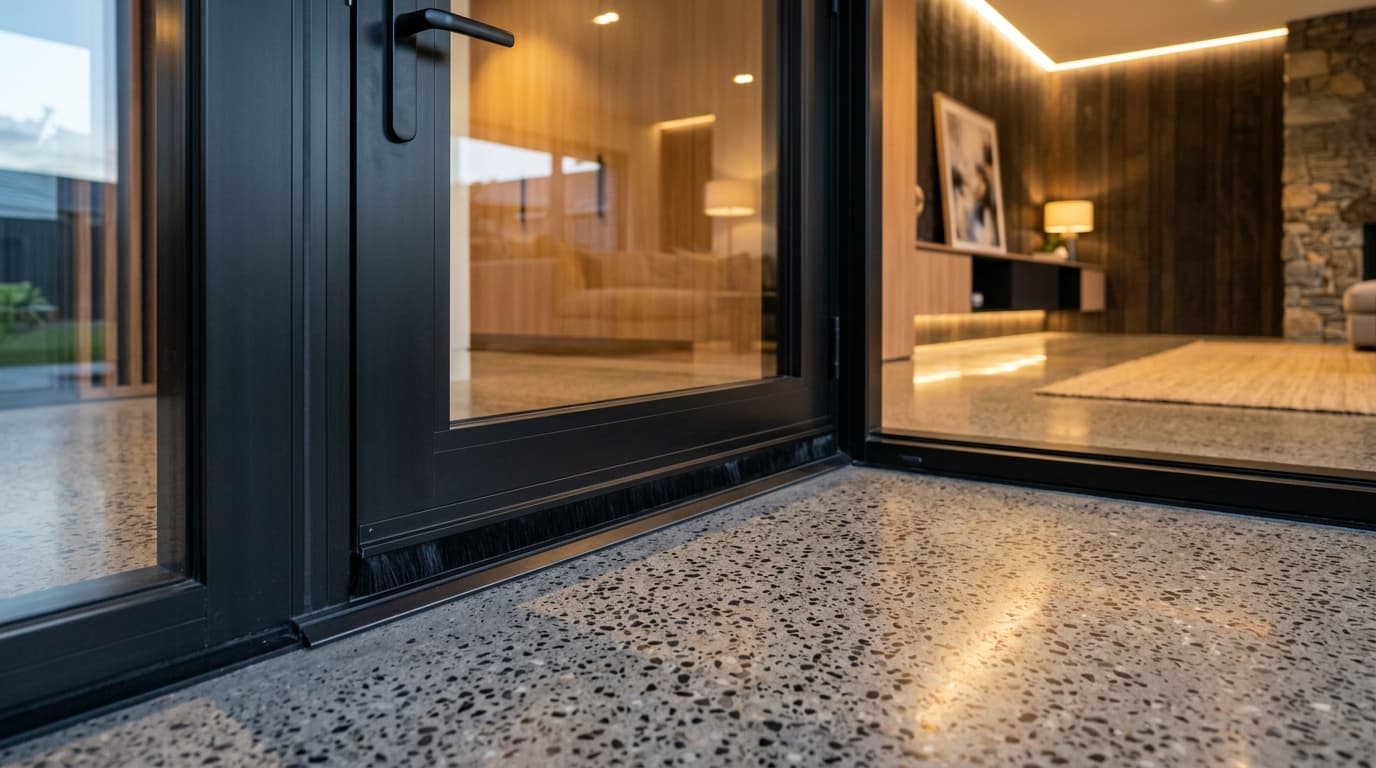
How to Stop Dust Coming Under a Door
The gap under the door is the biggest opening in most rooms. Which seal suits which door, and why brush beats rubber on a door that opens all day.

Aluminium Door Handle Types Explained: D, H, American and Taiwan
Four handle profiles, what each suits, and how to get the fixing centres right so you are not drilling a second set of holes.