Patch Fittings vs Hinges for Glass Doors

Two ways to hang glass, for two completely different loads. Using the wrong one is the most expensive mistake in a glass door job.
Do I need patch fittings or hinges for my glass door?
Hinges for a light shower door swinging from a wall or adjacent panel. Patch fittings on a floor spring for a full-height entrance door. A shower hinge will not carry an entrance door, and the failure is sudden.
Two entirely different jobs
Both fittings attach hardware to glass that cannot be drilled after tempering. That is where the similarity ends.
A shower hinge carries a light door — typically 25 to 40 kg — swinging from a wall or an adjacent fixed panel. The load is modest, the cycle count is low, and the door is usually under two metres.
A patch fitting carries a full-height frameless entrance door. Those are heavier, taller, and opened hundreds of times a day. The patch grips the glass at the top and bottom corners and transfers the whole load into a floor spring below and a pivot above.
How a patch system works
The door does not hang from anything. It pivots on a vertical axis, with a floor spring set into the slab taking its weight and damping its closing, and a top pivot keeping it in line.
The bottom patch clamps the glass and connects it to the floor spring spindle. The top patch does the same at the head. Between them they spread what would otherwise be a point load across a meaningful area of glass.
That load spreading is why patches look substantial. Concentrating an entrance door's weight on a small clamp is how toughened glass fails.
Why a hinge will not do it
Put a full-height entrance door on shower hinges and two things happen, in order.
The door sags, because the hinges are not rated to carry that weight over time. It stops meeting its frame, and it starts to bind.
Then the hinge fails, or the glass fails at the clamp point. Either way it is sudden rather than gradual, and it is a sheet of toughened glass in a doorway people walk through.
This is the one substitution in glass hardware we will not supply against. If you describe an entrance door and ask for shower hinges, we will tell you why that is the wrong fitting.
The floor spring has to be planned
The constraint that catches people out is timing, not cost.
A floor spring sits in a cavity cut into the slab, levelled so its cover plate finishes flush with the final floor surface. That means it has to be positioned while the floor is being laid, with the finished floor level known.
Retrofitting one into a completed floor means cutting it open, fitting the case, making good and matching the finish. On tile or stone, the repair is rarely invisible.
If a frameless glass door appears anywhere in the drawings, raise the floor spring at planning. It is one of the few decisions on a fit-out that genuinely cannot be deferred.
Locking a glass door
A frameless glass door has no stile to take a conventional lock, so it uses a patch lock at the bottom corner or a centre lock at mid height, both engaging a floor socket or a strike in the adjacent panel.
Those cut-outs, like all the others, are made before tempering. Decide whether the door locks before the glass is ordered.
Framed glass doors are a different case
A glass panel set into an aluminium frame is, for these purposes, an ordinary framed door. It takes an overhead closer and conventional hinges like any other, and none of the above applies.
The patch-and-floor-spring question only arises when the glass is genuinely frameless — glass edge exposed, hardware clamping directly to it.
If you are not sure which you have, photograph the top corner of the door where it meets the head, and send it on WhatsApp. The presence or absence of a frame at that corner answers it immediately.
Have Questions About Profile Specifications for Your Project?
Speak directly with our metallurgical sales team. We assist architects and structural contractors with die design, alloy selection, and wind load calculations.
Written by Abhishek, Salasar Aluminium & Hardware
Technical Hardware & Aluminium Engineering Team at Salasar Aluminium & Hardware, Raipur. Expert guidance on door kits, closers, shower hinges, and architectural fittings.
Read Next
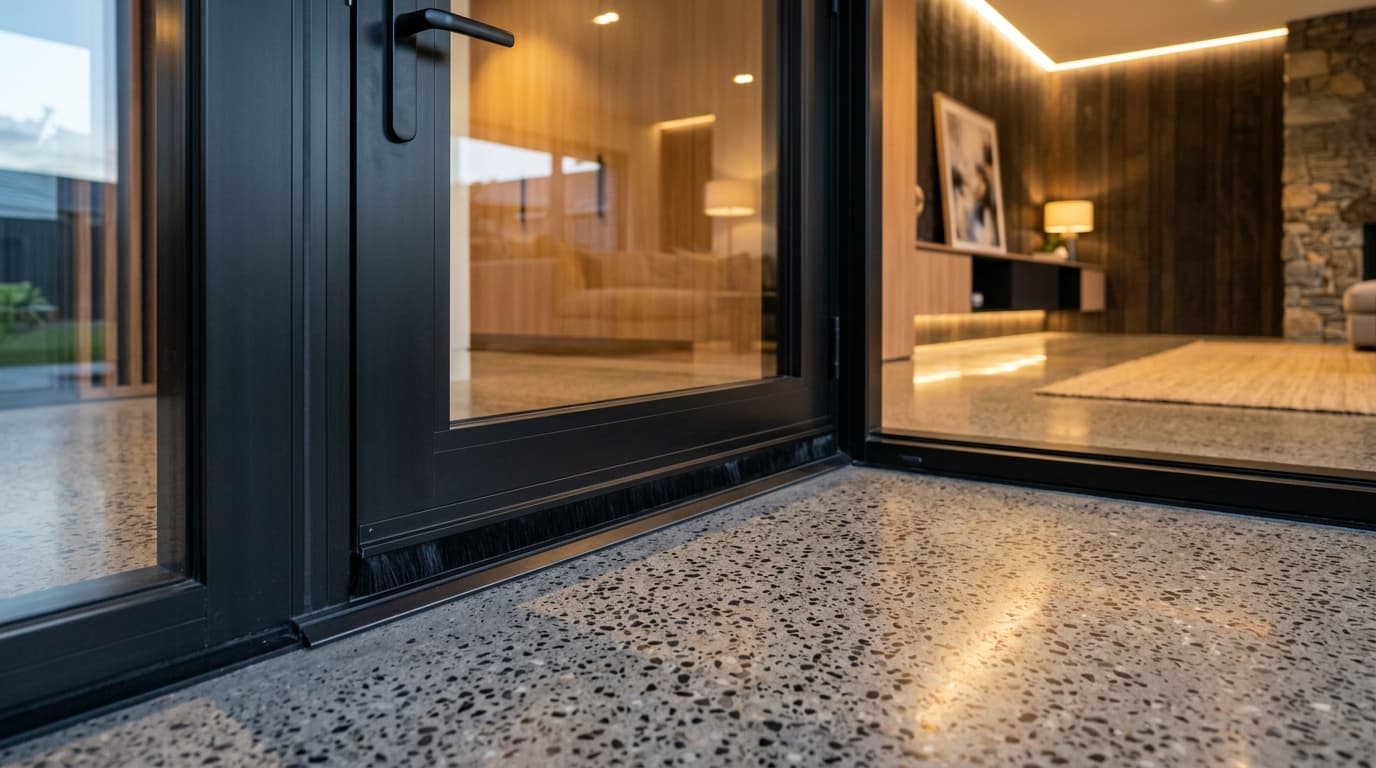
How to Stop Dust Coming Under a Door
The gap under the door is the biggest opening in most rooms. Which seal suits which door, and why brush beats rubber on a door that opens all day.

Aluminium Door Handle Types Explained: D, H, American and Taiwan
Four handle profiles, what each suits, and how to get the fixing centres right so you are not drilling a second set of holes.