Machar Jaali (Mosquito Mesh): Sizes and Materials

Which mosquito mesh to buy for a window — stainless steel, aluminium, powder-coated or plastic — and how to measure so you order the right roll width.
What width of machar jaali should I order?
Measure the clear opening of the window frame and take the next standard width up, so there is material to grip in the mesh channel. We stock 2 ft, 2.5 ft, 3.5 ft, 3.75 ft and 5 ft roll widths, in full rolls or short cuts.
Which mosquito mesh material lasts longest?
Stainless steel. It does not rust, does not go brittle in sunlight and keeps its tension for years. Plastic mesh is the cheapest and the shortest-lived; powder-coated steel sits in between and is the least visible from inside.
Measure the opening, not the glass
The commonest ordering mistake is measuring the pane. Mesh is fitted into the frame, so what matters is the clear opening of the mesh channel, measured corner to corner at the widest point.
Take that figure and go up to the next standard roll width. You need spare material to grip when the mesh is tensioned into the channel with the rubber beading, and trimming an oversize piece is trivial while stretching an undersize one is impossible.
Measure each window rather than assuming they match. Windows in the same wall are frequently a few millimetres apart, and on mesh a few millimetres is the difference between taut and sagging.
We stock five widths: 2 ft, 2.5 ft, 3.5 ft, 3.75 ft and 5 ft, as full rolls or short cuts. For one or two windows a short cut is the sensible purchase. For a whole house, a full roll works out better and leaves material for repairs.
Choosing the material
Stainless steel mesh, SA-81, is the long-term answer. It does not rust, ultraviolet light does not embrittle it, and it holds tension for years. It costs the most and it is the only one you are unlikely to revisit. Worth it on windows that are hard to reach, and on anything exposed to sun and rain.
Aluminium mesh is lighter and cheaper than stainless and resists corrosion well, but it is softer. It dents if it is leaned on and it is easier to tear, so it is better suited to windows above ground-floor level where nobody pushes against it.
Powder-coated black mesh, SA-83, is a steel mesh with a matte black coating. Its advantage is visual: a dark mesh substantially disappears when you look through it from a lit interior, where a bright one reads as a grey veil across the view. The coating also protects the steel underneath. This is the usual choice where the window matters to the room.
Plastic mesh, SA-84, is HDPE. It is the cheapest option and it does the job on a budget, but it goes brittle under direct sunlight over a few seasons and tears readily. Reasonable for a shaded window or a temporary fix; not a long-term fitting on a sunny elevation.
Bear in mind that the darker the mesh, the less you see it and the more it cuts light. That is a genuine trade-off, not a marketing line.
Fitting
Mesh is held by pressing it into a channel in the frame with a rubber beading, using a roller tool. The beading, not adhesive or staples, is what holds it.
Work from the centre of each side outward, keeping light, even tension. Pulling hard at one corner distorts the weave and the mesh sits wavy no matter what you do afterwards. If the mesh puckers, lift the beading out and start that side again — it will not settle on its own.
Trim the excess with a sharp blade only after all four sides are seated. Cutting early removes the material you need to hold on to.
Repair or replace
A small tear away from the edges can be closed with a patch, and it will hold. Anything larger, or any mesh that has gone slack across the whole panel, is better replaced. Mesh is inexpensive relative to the time spent fitting it, and a second repair on a tired panel rarely lasts.
Bring the old frame in if you are unsure which beading size you need, or send a photograph of the channel on WhatsApp.
Have Questions About Profile Specifications for Your Project?
Speak directly with our metallurgical sales team. We assist architects and structural contractors with die design, alloy selection, and wind load calculations.
Written by Abhishek, Salasar Aluminium & Hardware
Technical Hardware & Aluminium Engineering Team at Salasar Aluminium & Hardware, Raipur. Expert guidance on door kits, closers, shower hinges, and architectural fittings.
Read Next
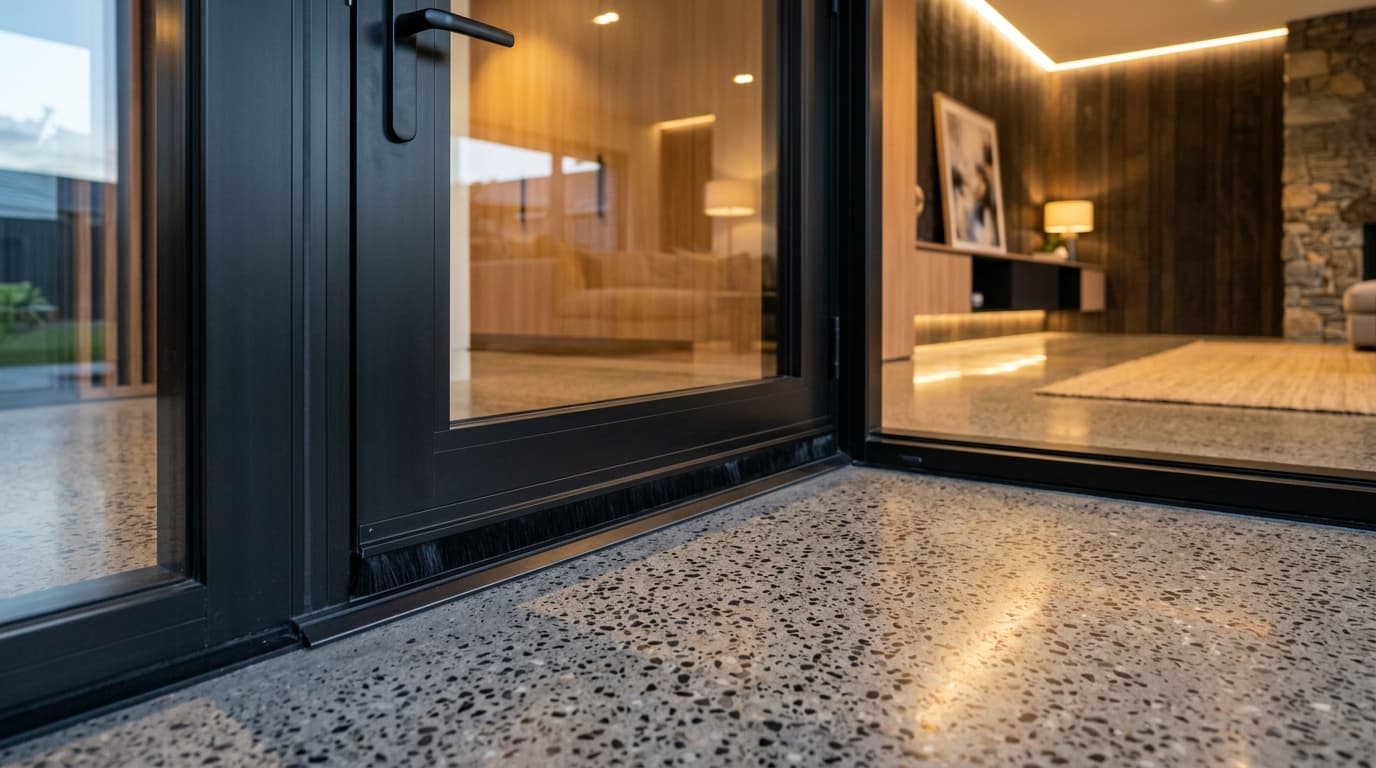
How to Stop Dust Coming Under a Door
The gap under the door is the biggest opening in most rooms. Which seal suits which door, and why brush beats rubber on a door that opens all day.

Aluminium Door Handle Types Explained: D, H, American and Taiwan
Four handle profiles, what each suits, and how to get the fixing centres right so you are not drilling a second set of holes.