How to Choose a Shower Hinge for 8–12 mm Glass
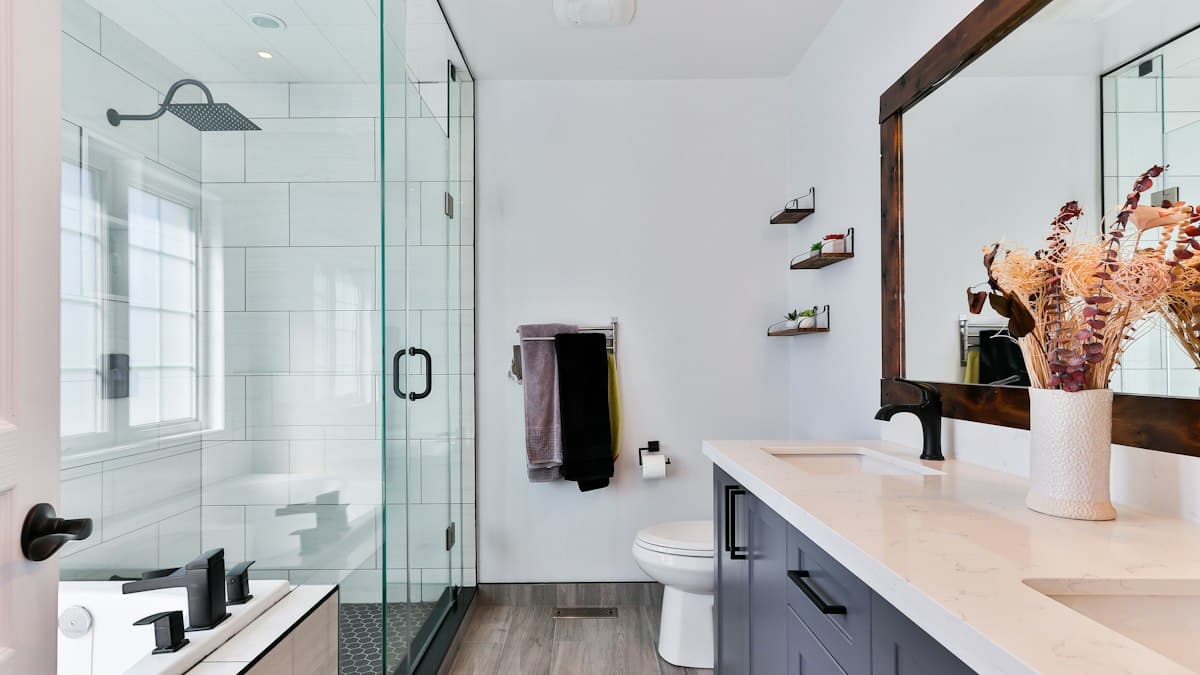
Pick the hinge by joint angle first, then glass thickness. A walk-through of the four shower hinge types, what each one is for, and how to avoid a door that sags.
How do I choose a shower hinge for 8 mm or 12 mm glass?
Choose by the joint angle first — 0° for a fixed panel, 90° for wall-to-glass, 180° for glass-to-glass in line, 90° double for a corner — then confirm the hinge is rated to carry your glass thickness. A 12 mm door hung on a hinge intended for 8 mm will sag and eventually drop.
Is a shower hinge the same as a glass door patch fitting?
No. A hinge carries a light shower door swinging from a wall or an adjacent panel. A patch fitting carries a heavy frameless entrance door pivoting on a floor spring, transferring the load at the top and bottom corners.
Start with the angle, not the thickness
Almost every wrong shower hinge we see was chosen by glass thickness alone. Thickness matters, but it is the second question. The first is what the hinge is joining, because that determines the shape of the fitting and there is no way to adapt one angle to another.
There are four joints in a typical enclosure. A fixed panel that does not move is held by a 0° clip. A door that swings off a solid wall uses a 90° wall-to-glass hinge. Two panels in the same plane, where one is fixed and one swings, need a 180° glass-to-glass hinge. A corner enclosure where the door swings between two fixed panels uses a 90° double glass-to-glass hinge.
Walk the enclosure and write down each joint before you order. A standard three-sided cubicle often needs three different fittings, and buying four of the wrong one is the usual way a bathroom job stalls.
What we stock
Our shower hinge range runs SA-75 to SA-78, all chrome plated, which is the standard finish for a wet area because it resists the constant humidity better than a painted or anodised surface.
SA-75 is the 0° fixed clip for stationary panels. SA-76 is the 90° wall-to-glass hinge and is the one most often needed. SA-77 is the 180° glass-to-glass inline hinge. SA-78 is the 90° double glass-to-glass hinge for corner enclosures.
Then check the thickness rating
Toughened shower glass in India is normally 8 mm, 10 mm or 12 mm. The hinge has to do two things with that glass: grip it without cracking it, and carry its weight without drooping over time.
Weight rises faster than you would expect. Glass weighs roughly 2.5 kg per square metre per millimetre of thickness, so a 700 mm by 1900 mm door is about 27 kg in 8 mm glass and about 40 kg in 12 mm. That extra 13 kg hangs off the same two hinges for years. A hinge rated for the lighter door will hold at first and then sag, and once the door stops meeting the seal the enclosure leaks.
Tell us the glass thickness when you order and we will confirm the correct item from stock against the actual product. [CONFIRM] Per-hinge glass thickness ratings are being added to the product pages and are not published here yet, because we would rather say nothing than publish a figure we have not verified against the item on the shelf.
Two more things that decide whether the door works
Self-closing versus free-swinging. A spring-loaded hinge returns the door to closed on its own. In a small bathroom that is genuinely useful. In a large one, where the door might sensibly be left open to air the room, it is an irritation.
Hole position. Toughened glass cannot be drilled after tempering. The cut-outs have to be specified before the glass is made. Buy your hinges before you order your glass, take the cut-out dimensions from the fitting, and give those to the glass supplier. Doing it the other way round means either new glass or a different hinge, and new glass is the more expensive of the two.
If you are unsure
Send a photograph of the corner on WhatsApp with the glass thickness and the rough panel sizes. Identifying the joint from a picture takes a minute and costs nothing, and it is far more reliable than working from a description over the phone.
Have Questions About Profile Specifications for Your Project?
Speak directly with our metallurgical sales team. We assist architects and structural contractors with die design, alloy selection, and wind load calculations.
Written by Abhishek, Salasar Aluminium & Hardware
Technical Hardware & Aluminium Engineering Team at Salasar Aluminium & Hardware, Raipur. Expert guidance on door kits, closers, shower hinges, and architectural fittings.
Read Next
How to Stop Dust Coming Under a Door
The gap under the door is the biggest opening in most rooms. Which seal suits which door, and why brush beats rubber on a door that opens all day.
Aluminium Door Handle Types Explained: D, H, American and Taiwan
Four handle profiles, what each suits, and how to get the fixing centres right so you are not drilling a second set of holes.