Door Closer Size by Door Weight

How to match a door closer to the door it has to control, the difference between overhead, pencil and capsule closers, and why an undersized closer fails fast.
How do I choose a door closer size?
Size by the width and weight of the door leaf, not by the size of the room. Door closers are graded by power size, and the grade must cover the door it controls — an undersized closer will not latch the door, and an oversized one makes it too heavy to open comfortably.
What is the difference between an overhead, pencil and capsule door closer?
An overhead hydraulic closer is the general-purpose fitting for ordinary doors. A pencil closer is a slim pneumatic unit for light doors such as screen and mesh doors. A capsule closer is a heavier hydraulic body built for high-traffic entrances.
What a door closer is actually doing
A door closer stores energy when the door is opened and releases it to bring the door back to the frame and hold it shut. Two forces work against it: the weight of the leaf, and any air pressure across the opening.
That second one catches people out. A door in a corridor, a stairwell or an air-conditioned room can be meaningfully harder to close than the same door standing in an interior partition, because the closer is fighting a pressure difference as well as the door's own mass.
Size by the door, not by the room
Door closers are graded by power size. The grade you need follows from the width of the door leaf and its weight, and wider doors need more power than their weight alone suggests because the leverage works against the closer.
Two failure modes bracket the right answer. Undersize it and the door will not pull itself fully into the latch — it drifts to almost closed and sits there, which defeats the entire point and, on a fire door, is a safety failure. Oversize it and the door becomes genuinely hard to open, which is a problem for children, elderly users and anyone carrying something, and puts avoidable strain on the hinges.
Measure the leaf width and get the weight from the door supplier before you order. If you cannot get a weight, tell us the material and dimensions — a 35 mm hollow flush door and a 45 mm solid teak door of the same size are nowhere near the same mass.
The three types we stock
Overhead hydraulic closers, SA-42, are the general-purpose fitting. The body mounts on the door or frame with an arm linking the two, and hydraulic damping controls the closing speed. We stock them with an aluminium body and with a stainless steel cover, the cover being the better choice where the closer is visible or exposed to damp.
Pencil closers, SA-43, are slim pneumatic units. They are not scaled-down hydraulic closers and they do not do the same job. They are for light doors — mesh and screen doors, light internal shutters — where all that is needed is a gentle automatic return. Fitting one to a main entrance door is a common and expensive mistake.
Capsule closers, SA-44, use a heavier hydraulic body designed for high-traffic entryways. Where a door is cycled hundreds of times a day, the seals and fluid in a lighter closer degrade quickly. A capsule closer costs more up front and outlasts several of the alternative.
Adjustments that matter after fitting
Most hydraulic closers have two independent speed adjustments and they do different things. Closing speed governs the main sweep from fully open to roughly fifteen degrees. Latching speed governs the last stretch into the frame.
Set the closing speed slow enough to be safe and the latching speed fast enough to actually engage the latch. A closer that sweeps quickly and then crawls the last few degrees will leave the door resting against the frame unlatched — the single most common complaint, and it is a five-minute adjustment, not a fault.
Turn the valves in small increments, a quarter turn at a time, and test between each. Backing a valve all the way out can let the hydraulic fluid escape, and that ends the closer.
Floor springs are a different product
For a frameless glass door, an overhead closer is usually the wrong answer. Those doors pivot on a floor spring — SA-45 in our range — set into the floor, with patch fittings transferring the load at the top and bottom corners.
Floor springs have to be positioned before the floor is finished, so that decision belongs in the planning stage of the job, not at fit-out.
Have Questions About Profile Specifications for Your Project?
Speak directly with our metallurgical sales team. We assist architects and structural contractors with die design, alloy selection, and wind load calculations.
Written by Abhishek, Salasar Aluminium & Hardware
Technical Hardware & Aluminium Engineering Team at Salasar Aluminium & Hardware, Raipur. Expert guidance on door kits, closers, shower hinges, and architectural fittings.
Read Next
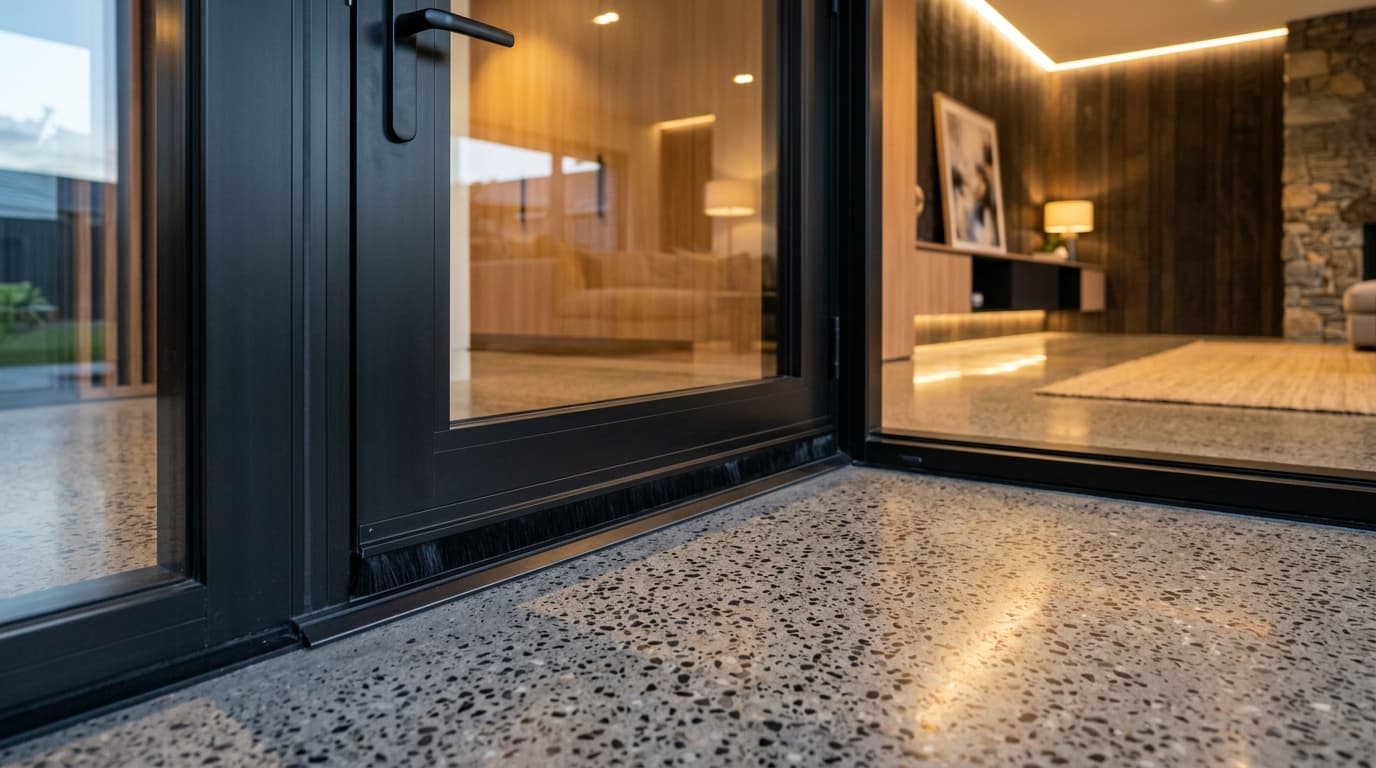
How to Stop Dust Coming Under a Door
The gap under the door is the biggest opening in most rooms. Which seal suits which door, and why brush beats rubber on a door that opens all day.

Aluminium Door Handle Types Explained: D, H, American and Taiwan
Four handle profiles, what each suits, and how to get the fixing centres right so you are not drilling a second set of holes.